Forward Collision & Braking
Forward Collision Warnings
You may hear it called:
Collision Avoidance Alert
Impact Alert
Forward Alert
What are Forward Collision Warnings?
Forward Collision Warnings alert you of a potential crash with a lead vehicle by issuing an alert. Each system is different, and your vehicle may alert you by using any combination of visual alerts, auditory alerts, or vibration alerts. Check your owner’s manual for details.

Automatic Emergency Braking
You may hear it called:
AEB
Autonomous Braking
Wingman Advanced
Smart Braking
What is Automatic Emergency Braking?
Automatic Emergency Braking works to apply your truck’s brakes if you do not respond quickly enough to a stopped or braking vehicle in front of you. Automatic Emergency Braking systems are often paired with the Forward Collision Warning system which warns you first, then, if you do not respond, the vehicle will apply the brakes. Some systems will pulse the brakes to slow the vehicle while others will initiate full Automatic Emergency braking by activating braking up to 100% of the maximum braking power. See your vehicle owner’s manual for specifics on what actions your vehicle will take if you do not respond to a Forward Collision Warning.
Watch out for:
Ice, dirt, and debris: Sensors on the vehicle cannot “see” if they are blocked. Make sure your sensors are clean during your pre-check.

Curves: When turning, the truck may have trouble detecting the vehicle in front of you. Be prepared to act when going through a sharp curve.
Speed: If your truck is going much faster than a vehicle in front of you, the system may not react fast enough. Do not rely on the system to stop you from crashing.
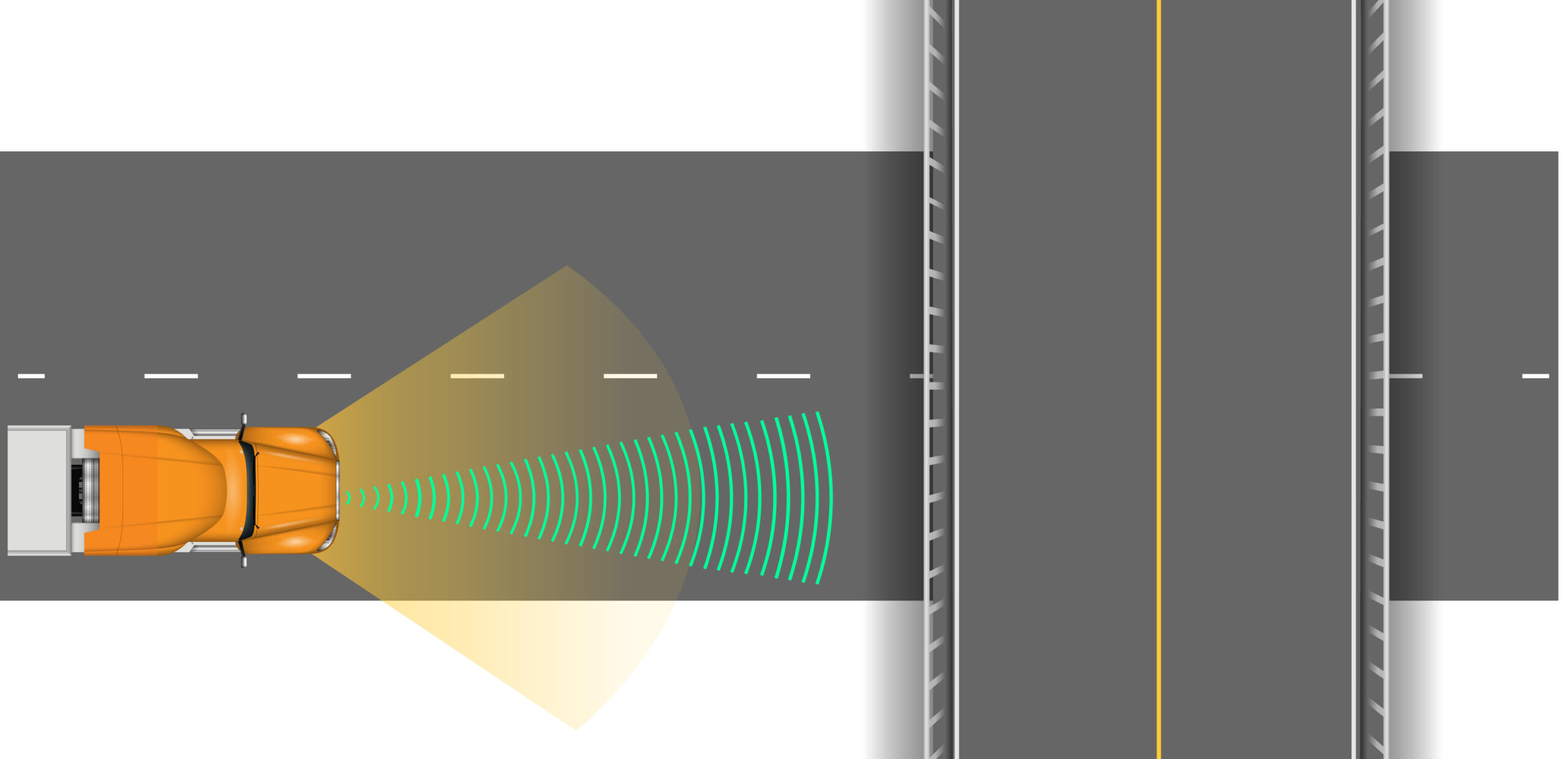
Roadside Objects: A roadside object such as a parked car, bridge, overpass, or large signage can cause the system to respond in an inappropriate manner.
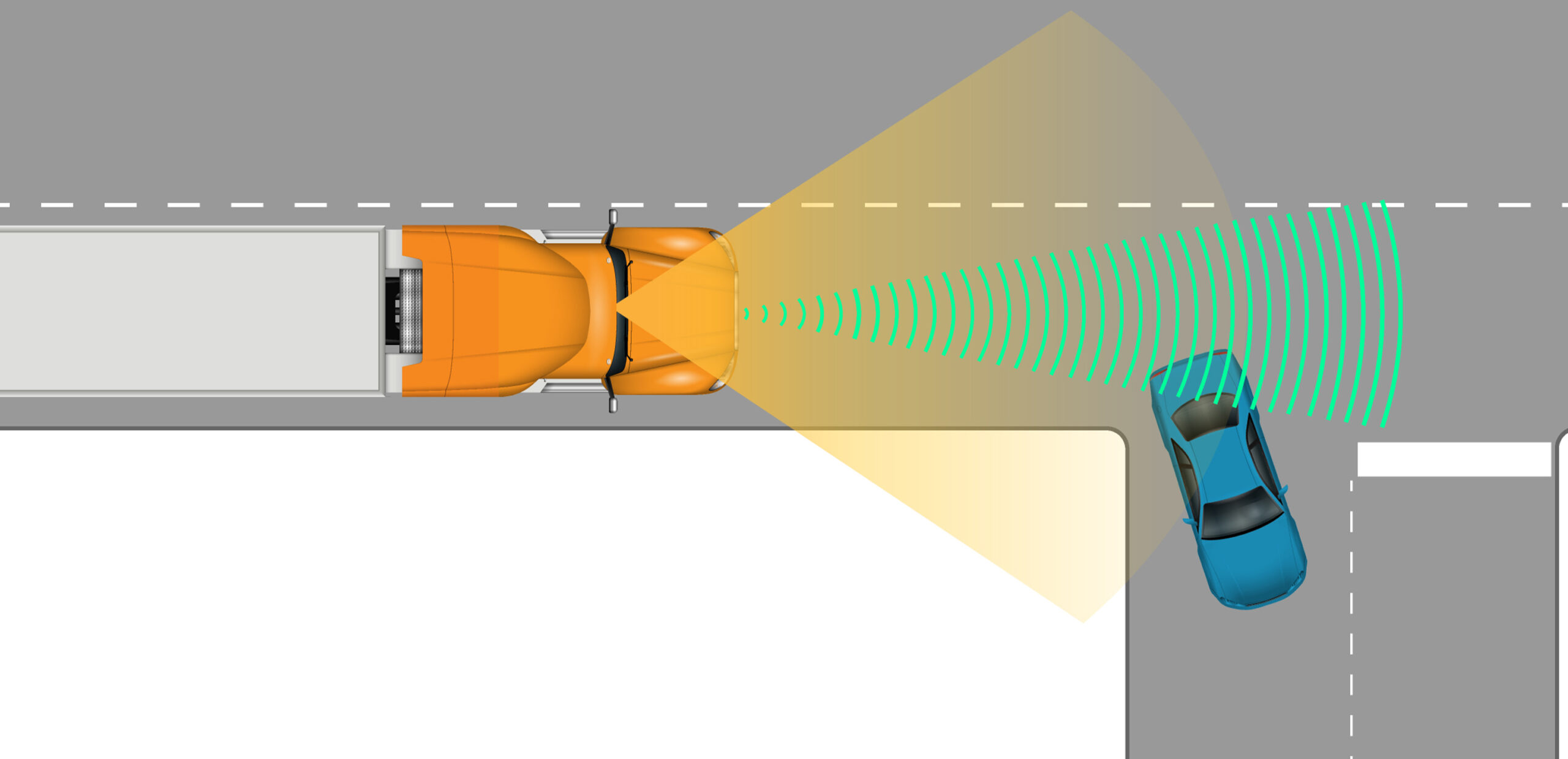
Turning Vehicles: If a vehicle in front of you is slowing to make a turn and you approach quickly, expecting the vehicle to clear your path before a collision, the automatic emergency braking may react unexpectedly by issuing warnings or braking the vehicle.
Common Myths
Not all systems are equal.
Myth #1
AEB will prevent all rear-end crashes.
Fact #1
AEB may reduce crash severity, but it cannot prevent every crash.
Sudden stops, high speeds, poor traction in snow or rain, or limited visibility of the sensors may reduce system performance.
Myth #2
My truck will always warn me before I rear-end another car.
Fact #2
You may not receive a forward collision warning in every situation.
Curves, sudden cut-ins, stopped vehicles, or blocked sensors can reduce how quickly the system detects a hazard.
Myth #3
My braking and warning systems will perform well in all weather conditions.
Fact #3
Weather may affect sensor performance.
Rain, snow, fog, dirt, and even harsh sun glare can affect how well cameras and radar detect other vehicles and hazards.
Upgraded Features
Some systems include advanced capabilities. Please check with your owner’s manual or safety manager to see if your system has these features.
Audio Suppression
Some vehicles will turn down your music/radio automatically while the forward collision warning alert is on to make sure you hear it clearly.
Multi-lane AEB
Provides added protection by monitoring vehicles in the adjacent lane. For example, if a driver makes an evasive maneuver into another lane to avoid a crash.
Obstacles & Pedestrian Detection
Advanced Forward Collision Warnings and AEB not only detect vehicles in your path, but they can also detect debris, pedestrians, and other obstacles.
Crashed Vehicle Detection
Some advanced braking systems can recognize crashed or disabled vehicles that are not sitting straight in the lane, including vehicles partly on the shoulder or at an angle after a crash. Not all systems can detect oddly angled vehicles.
VTTI provides this information for general knowledge and education. However, VTTI does not guarantee the accuracy, completeness, or applicability of this information to any specific vehicle or situation. Drivers are strongly encouraged to consult their vehicle’s owner’s manual for detailed instructions and guidance on the proper use and functionality of these systems.