Blind Spots & Side Detection
Blind Spot Warnings
You may hear it called:
Side Guard Assist®
Front Guard Alert®
BlindSpotter®
It is important to note that systems in this section can be divided into those that are designed only to warn you of a threat and those that actively intervene to avoid a crash.
Systems with “warning” or “detection” in the name or description are typically limited to providing just a warning while those that use “active” or “intervention” tend to provide active assistance.
Turn Signals
Many Blind Spot Warning systems produce an additional warning when the turn signal is used. For example, a light might appear when a vehicle is detected in the blind spot by the system, but once a turn signal is activated, the light flashes or an auditory alert sounds to further draw attention to that vehicle.
Highway Warnings
Blind Spot Warning systems help you by detecting vehicles that may be difficult to see in your side mirrors, especially on highways during lane changes. When another vehicle enters your blind spot, the system may display a visual warning near the mirror or on the dashboard. If you signal a lane change while a vehicle is still in the blind spot, the system may also provide an audible alert or flashing warning to help get your attention.
Here’s a video example of a Blind Spot Warning system on the highway:
Low-Speed Warnings
Some Blind Spot Warning systems also provide feedback during low-speed, city driving or yard driving by helping you detect vulnerable road users, like pedestrians or bicyclists, traveling near the sides of your truck. These systems are especially helpful during turns, in busy intersections, or when visibility is limited. If the system detects a person near the truck, it may issue a visual, or audible warning to help draw your attention to the potential hazard. Not all trucks have blind spot warnings on both sides of the truck. For example, some systems only alert you to obstacles in the passenger-side blind spots. Check your owner’s manual for specific details about your system.
Here’s a video example of a pedestrian Blind Spot Warning:
Blind Spot & Side Intervention
You may hear it called:
Active Side Guard Assist®
Active Lane Assist®
Active BlindSpotter®
These systems are designed to support you during lane changes, but you should always check your mirrors, monitor surrounding traffic, and stay prepared to steer.
Highway Intervention
Some trucks include Blind Spot Intervention systems that go beyond warning you. While Blind Spot Warning systems alert you when another vehicle is in your blind spot, Blind Spot Intervention systems can help prevent a crash during highway lane changes. If you start to change lanes into an occupied lane, the system will provide steering support or braking to help guide you back into your original lane.
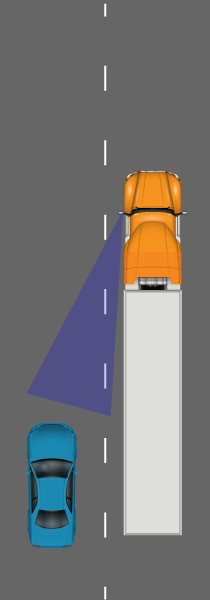
Monitor environment
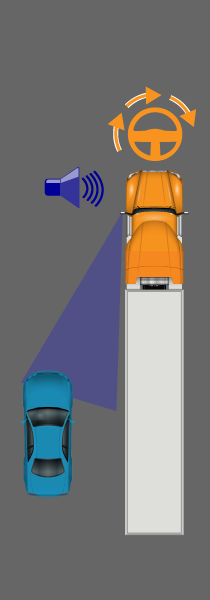
Blind spot intervention steers away from vehicle

Monitor environment
Low-Speed Intervention
Blind Spot Warning and Blind Spot Intervention systems on some trucks are also designed for driving at low speeds in city streets, intersections, yards, and loading areas. These systems can help you detect pedestrians, bicyclists, or objects traveling alongside your truck during turns or tight maneuvers. If the system determines a crash may occur and you do not respond to the obstacle, the system may automatically apply the brakes to help prevent contact. Check your owner’s manual to learn about the specifics of your system.
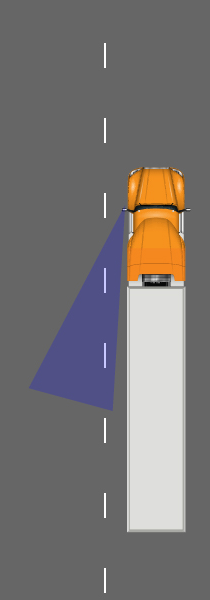
Monitor environment
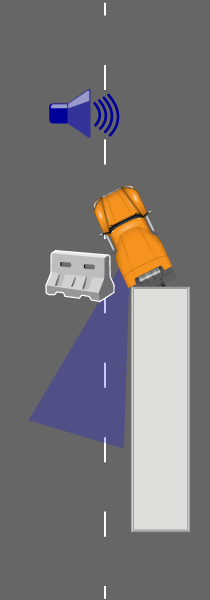
Alert when object is in blind spot

Truck stops to avoid contact
Watch out for:
Blocked Sensors: Dirt, snow, ice, road spray, or damaged sensors can affect how well blind spot systems detect nearby vehicles or objects. Blocked sensors may cause missed warnings or unexpected alerts.
Fast-Moving Objects: Fast-moving cyclists, motorcycles, or aggressive turns can make it harder for the system to track nearby objects. Be sure to always check mirrors and surroundings before changing lanes or turning.
Environment: Some systems are designed mainly for highway driving, while others also support low-speed city driving and turns. System behavior and detection zones may change depending on your speed.
Common Myths
Myth #1
I don’t need to check my mirrors before a lane change if I have a blind spot warning system.
Fact #1
Blind spot warning systems are designed to support you, not replace scanning and mirror checks.
You should still check mirrors, monitor traffic, and make sure the lane is clear before changing lanes. The system may not see all vehicles or objects.
Myth #2
Blind Spot Warning and Blind Spot Intervention systems protect every inch of the truck.
Fact #2
Blind spot warning systems may not monitor the entire length of the truck and trailer.
Detection zones can vary depending on truck, trailer configuration, road conditions, speed, and system design.
Myth #3
Blind spot sensors can detect all objects, people, and vehicles.
Fact #3
Not all objects, people, or vehicles may be detected.
Blind spot sensors may have difficulty detecting smaller vehicles, motorcycles, pedestrians, bicyclists, fast-moving objects, or vehicles approaching at sharp angles. Weather, dirt, road spray, and blocked sensors can also affect system performance.
VTTI provides this information for general knowledge and education. However, VTTI does not guarantee the accuracy, completeness, or applicability of this information to any specific vehicle or situation. Drivers are strongly encouraged to consult their vehicle’s owner’s manual for detailed instructions and guidance on the proper use and functionality of these systems.