Speed Assistance
Speed Assistance Systems
You may hear it called:
Traffic Sign Recognition
Active Speed Intervention
Intelligent Speed Assist
Overspeed Alert
What are Speed Assistance Systems?
Speed assistance systems can recognize posted traffic signs such as speed limit signs, no trucks signs, no passing signs, school zone signs, and they can alert you when the truck is traveling above the detected speed limit. The system uses a forward-facing camera and map data to display the sign information to you. Depending on the settings in your truck, the system may provide visual alerts, audible warnings, or even brief reductions in engine power if you continue traveling above the posted limit. You are responsible for maintaining the posted speed limit. These features are designed to help draw your attention to speeding or sudden changes in speed limit. Sign detection varies by system so be sure to check your owner’s manual for details.
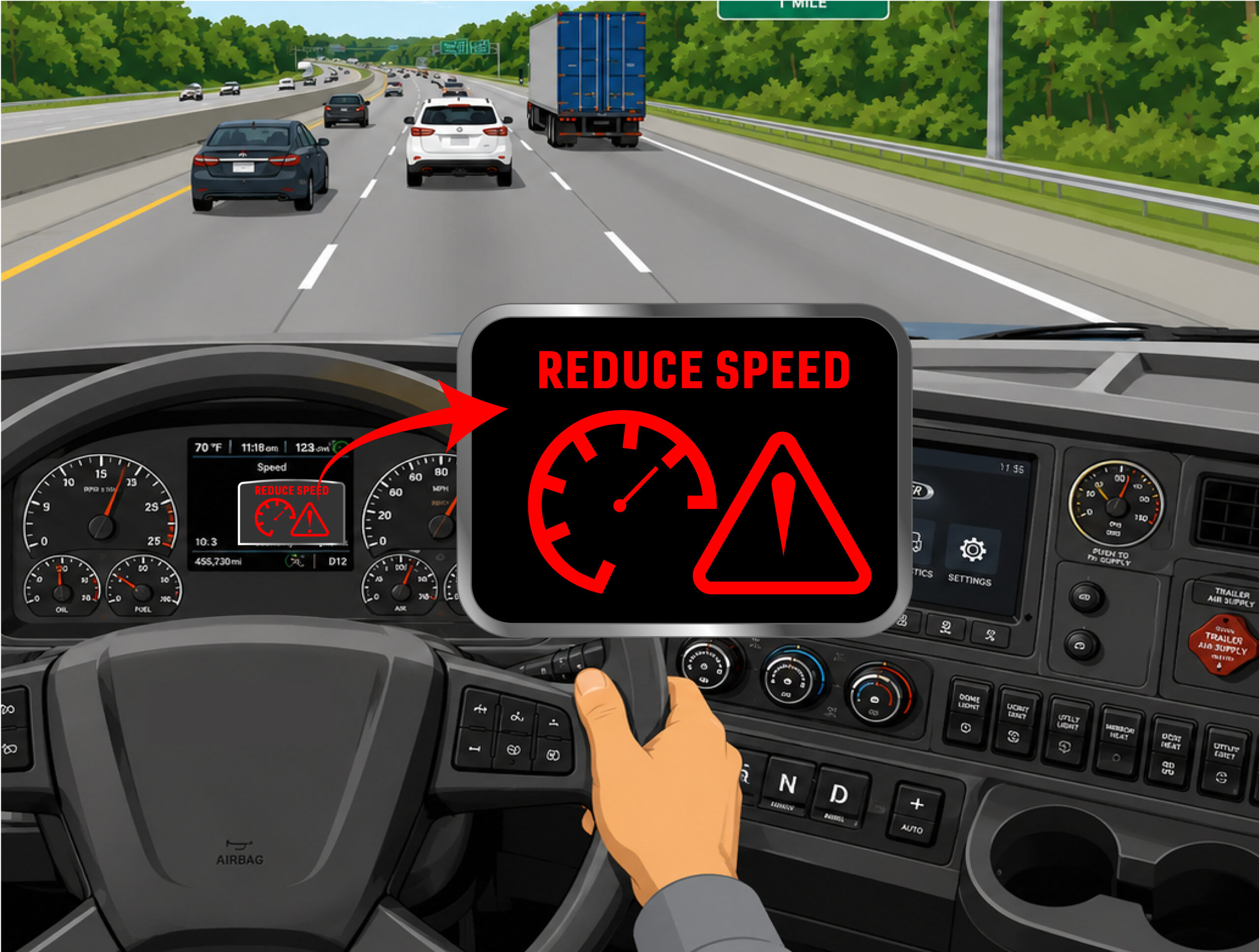
Watch out for:
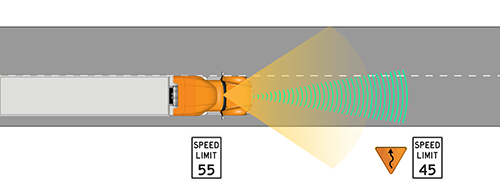
Hard-to-read signs: Damaged, faded, temporary, or blocked signs and inclement weather can make it harder for the system to recognize the correct speed limit. Construction zones and poor lighting may also affect sign detection.
Dirty windshields: Speed assistance systems rely on forward-facing cameras mounted on the windshield. Dirt, snow, ice, bugs, rain, or road spray can affect the system’s ability to read the road signs.
Common Myths
Myth #1
The system will always display the correct speed.
Fact #1
Speed assistance systems are not perfect and can be impacted by various environmental conditions.
Construction or school zones with temporary signs, damaged signs, poor visibility, heavy weather, glare, or signs blocked by dirt or snow affect how accurately the system reads roadway signage. When traveling in areas with variable speed limits, make sure to verify you are following the posted speed limit, do not rely only on the speed displayed inside of your truck.
Myth #2
If there’s no alert, then I’m not speeding.
Fact #2
You may still be speeding even if the system does not issue an alert.
Alert thresholds may vary by truck or company settings, and the system may not detect every speed limit sign correctly.
VTTI provides this information for general knowledge and education. However, VTTI does not guarantee the accuracy, completeness, or applicability of this information to any specific vehicle or situation. Drivers are strongly encouraged to consult their vehicle’s owner’s manual for detailed instructions and guidance on the proper use and functionality of these systems.