Lane Support
Lane Departure Warning
You may hear it called:
Lane Drift Warning
Roadway Departure Warning
Lane Departure Alert
What is Lane Departure Warning?
Lane departure warnings help alert you if your truck crosses the lane line without a turn signal. The system may use sounds and/or dashboard messages to get your attention. Lane departure warnings only alert you; they do not actively intervene to steer you back into your lane. These alerts are typically only provided above certain speeds, please refer to your owner’s manual for exact speed.
Example of a lane departure warning:
Example of a false lane departure warning:
Lane Keep Assist
You may hear it called:
Lane Departure Protection
Dynamic Steering with Lane Keeping Assist
Wingman Advanced
Lane Keeping
What is Lane Keep Assist?
Lane keep assist intervenes if you do not respond to a lane departure warning. It provides a gentle nudge to move you back towards the center of the lane and away from the lane markings. It is not intended to keep you centered in the lane but works together with lane departure warning systems.
Lane Centering
Lane centering is designed to keep you centered between the lane lines. The system is designed to maintain a centered lane position even as the roadway curves. As the vehicle follows the roadway, small changes in your lane position can occur. The system will actively intervene and correct to steer you back towards the center of the lane. Lane centering is manually activated and may also require adaptive cruise control to be active at the same time. Some systems may also require a minimum speed to activate.
Depending on your system, Lane Centering may include additional features such as Lane Keep Assist and lane Departure Protection. Check your owner’s manual for details. Once the system is on, you can feel your truck making small corrections to maintain lane position.
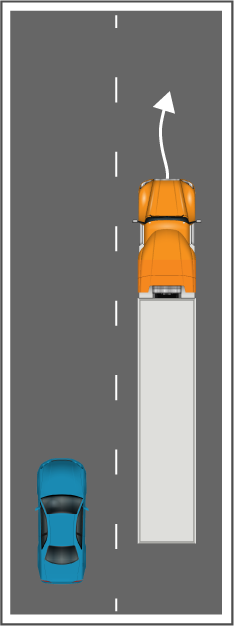
Monitor environment
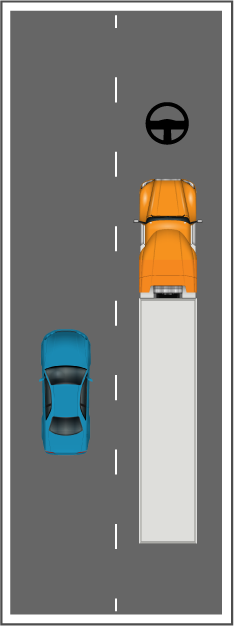
Activate lane centering
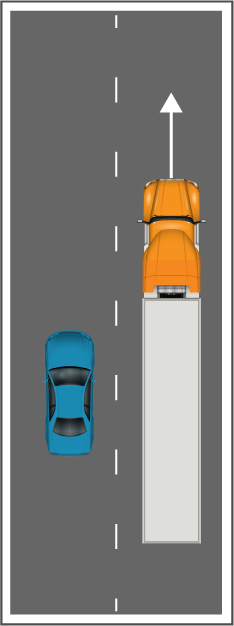
Monitor environment
Lane Markings Matter
You should always be prepared to steer manually if lane markings become unclear.
Faded Lane Lines: Over time, heavily traveled highways may have faded or difficult-to-see lane markings. When lane lines become harder to detect, the system may provide less steering support, issue alerts unexpectedly, or temporarily stop working until the markings become clear again.
Lighting & Environment: Snow, dirt, and standing water can make lane markings difficult to detect. Strong sunlight, glare, nighttime driving, or heavy shadows, like an overpass, may make the system briefly lose track of the lane or provide inconsistent steering.
Construction Zones: Construction areas often include temporary lane markings, shifting lanes, cones, uneven pavement, or missing lines. These changing layouts can confuse the systems and may cause the truck to react differently than expected. You should pay close attention and be prepared to deactivate the lane centering or lane departure warning system to prevent “nuisance” alerts in construction zones.
Common Myths
Myth #1
Lane Departure Warnings are always right.
Fact #1
Lane Departure Warnings rely heavily on the quality of lane markings.
Faded, missing, or temporary lane markings can affect alert functionality. Anything that mimics the look of a lane line such as tire treads in heavy rain, skid marks, or pavement cracks may cause false warnings.
Myth #2
Lane Keep Assist is the same as Lane Centering.
Fact #2
Lane Keep Assist only helps to nudge the vehicle back towards the center of a lane, not actively maintain a centered lane position.
Lane Keep Assist only intervenes when you are crossing a lane marking without a turn signal. Lane Centering is a more advanced feature that is continuously making small corrections to keep you in the center of the lane.
Myth #3
Lane Centering systems drive the truck for you.
Fact #3
Lane centering is designed to support drivers, not replace them.
You must continue watching the road and be prepared to steer at all times. Most systems require you to keep your hands on the steering wheel even when lane centering is active. If steering input is not detected, the truck may issue alerts or disable the feature.
Myth #4
If Lane Centering is on, the truck will always stay centered.
Fact #4
Lane Centering can be helpful, but it is not perfect.
Road conditions, faded lane markings, weather, curves, and traffic can all affect how accurately the system keeps the truck centered in the lane.
Myth #5
Lane Centering can avoid hazards in the road.
Fact #5
Just because the truck can steer, doesn’t mean it knows where you want to go.
Lane centering is built to follow lane markings, not avoid hazards like debris, disabled vehicles, or animals in the road. Always be prepared to manually avoid an unexpected object in your lane or move over to avoid a stopped vehicle on the side of the road.
VTTI provides this information for general knowledge and education. However, VTTI does not guarantee the accuracy, completeness, or applicability of this information to any specific vehicle or situation. Drivers are strongly encouraged to consult their vehicle’s owner’s manual for detailed instructions and guidance on the proper use and functionality of these systems.